Google photos is swiftly turning into the pesky secretary with its prompts of “On this day, a year ago….”.
As May ends, I come to realise it’s been 5 months since I roamed the streets of Aurangabad – curious and supremely satisfied in solitude.
While Ellora formed the content of my previous post, I now return to the city of Gates to journal the rest of its prodigious monuments.
I recall a conversation my fellow travelers were having in the hostel the evening I returned from Ajanta. They were all nodding their heads, seemingly agreeing that Ellora, in its rock cut, in-your-face glory was undisputedly better than Ajanta – the far outpost, out of the way and mysterious.
I disagree. Both are so different, so unique that my mind protests at any attempt in comparing these two most recognizable giants in Indian archeology.
And now, 5 months later, I am only filled with fond memories of that day. Getting up at 5 AM on a Sunday, making my way to the Central Bus Stand in an auto, barely awake, and dubiously getting on a bus that I hoped was headed to Ajanta. I remember the sigh of relief when the conductor handed my ticket and I could relax enough to start dozing, my destination 3 hours and a 104 kms away. I remember looking out the window and spotting a cart vendor ferrying freshly steaming poha, my empty stomach grumbling forlornly in the hope I would feed it – I didn’t, I deemed my window seat the more precious prerogative in the unbelievably crowded bus. The next 3 hours went by in a sleepy daze and to say that I was bemused when I finally got down at my stop would be an understatement. Deserted, in the middle of a highway, with no bus stand or soul in sight and surrounded by distant hillocks – this is the vast scenery that greets you when you make your way to the Visitors’ Entrance at Ajanta. It is a modern structure built by the government to boost local income, I suppose, and houses markets, amenities, a ticket booth, and the biggest parking space I have ever seen. The actual entrance to the caves is roughly 3 kms away and ASI has a regular bus ferry with a nominal fare. I had naively hoped that I would find the caves right where the bus dropped us. Hah.
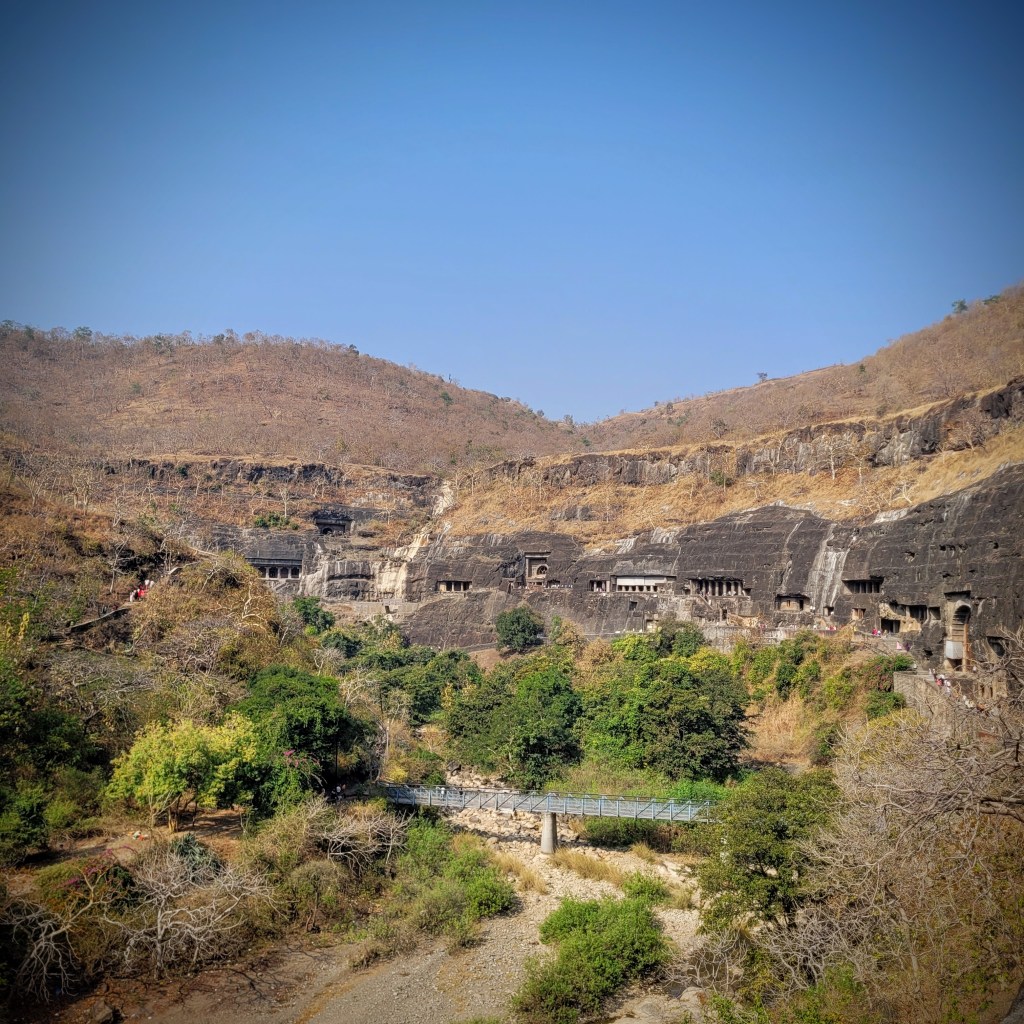
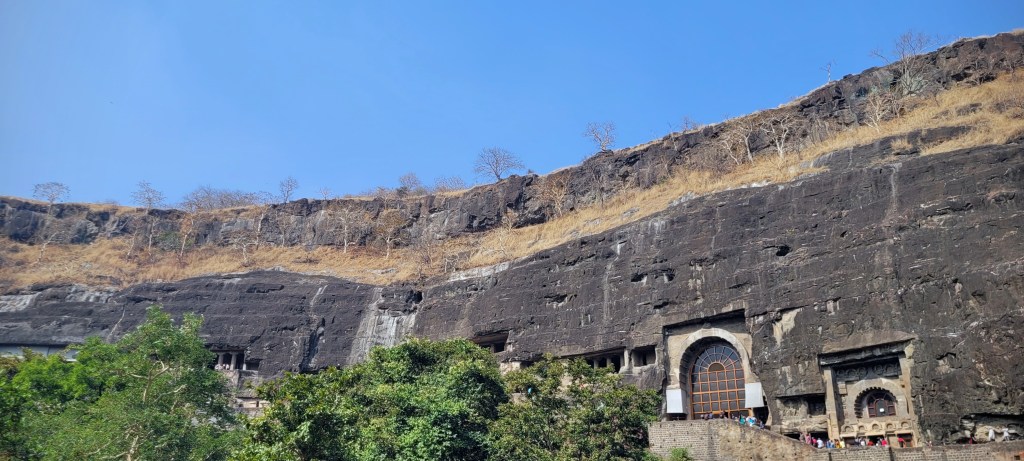
A further short walk and uphill trek eventually unfolds a majestic view of a horseshoe cliff, distant reliefs of high windows and doorways the only hint of what is hidden in the depths. I was determined to hire a guide and spent quite a bit of time trying to haggle for one – a guide costs Rs 1,800 which is prohibitively costly for a solo traveler. I ended up sharing a guide with another family and still had to pay Rs 1,000. A guide is greatly required, even if you hire one only for a few caves, else you will be agreeing with my hostel friends that Ajanta has nothing to offer.
Ajanta is a series of 30 caves (some of them unfinished) carved into in the cliffside, abutting the Waghur river and surrounded by dense forests. They belong to different time periods and dynasties, though all of them are Buddhist and help in shedding light on the religion’s fascinating history and transition through the centuries.
| Phase – 1: 2nd Century BC to 1st Century AD | Satavahana Dynasty and Hinayana/Nikaya form of Buddhism | Buddha was worshipped not in the form of idols or paintings, but through stupas standing in as a symbol for Buddha. Caves 8, 9, 10, 12, 13, 15A belong to this early stage and are characterized by simple prayer halls called Chaityas (with Stupas at the cave center) and rest houses called Viharas |


If you try really hard, you can spot the faint carved letters of his name & date that John Smith left as his signature on a pillar in Cave 10. This is a Chaitya hall and is perhaps one of the earliest caves to be been excavated in 2nd Century B.C
It is interesting to note the John Smith’s carving of his signature is above the height of an average human. It’s because at the time of his discovering the cave, it was covered in rubble and the floor was buried beneath.
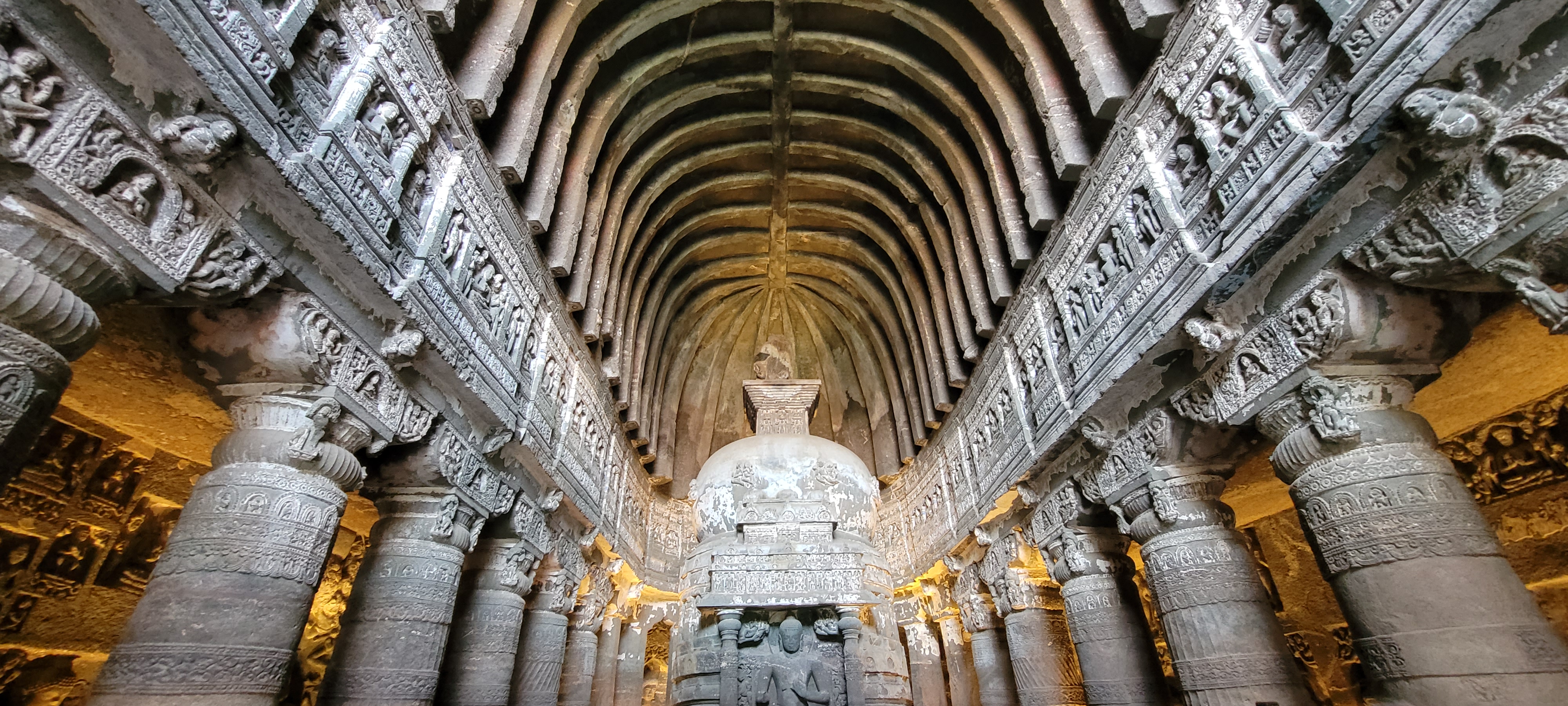
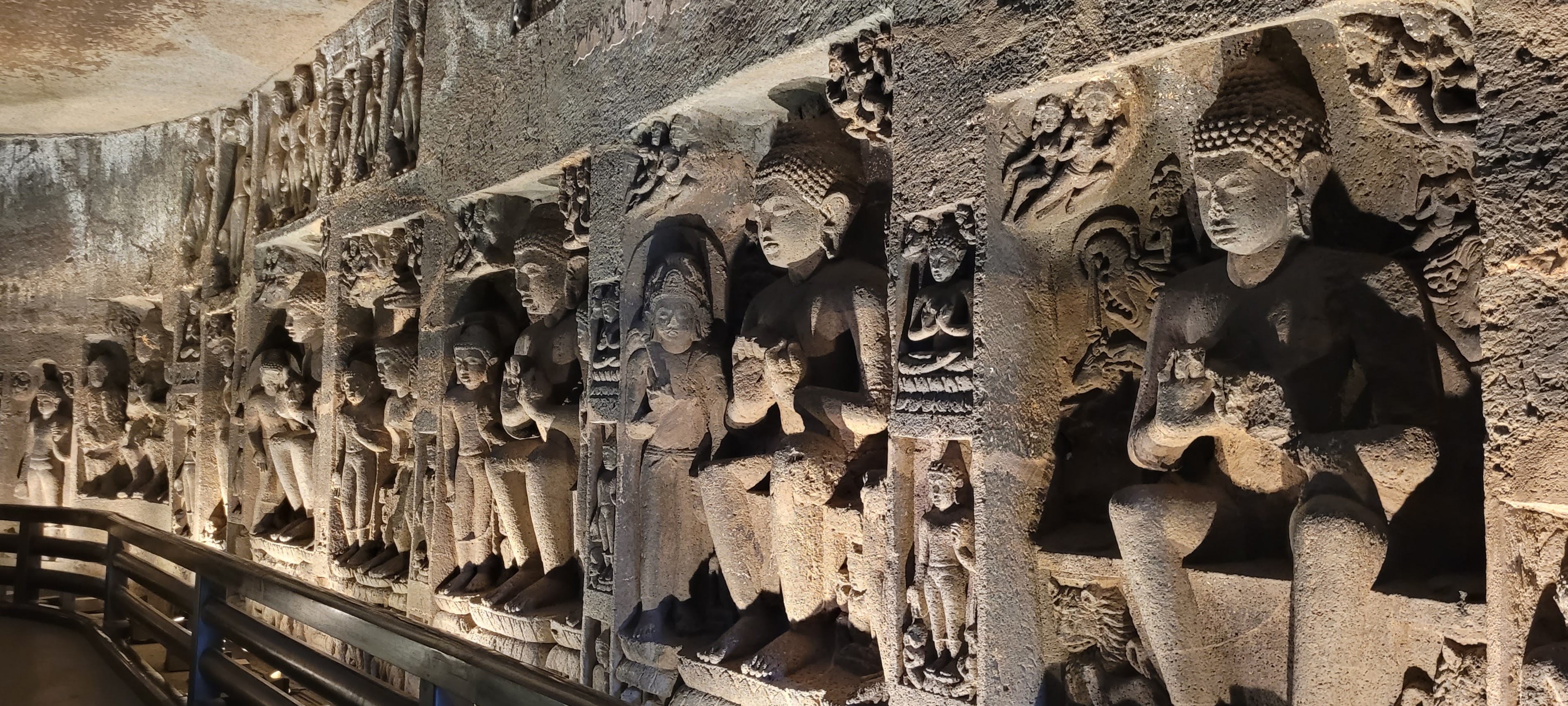
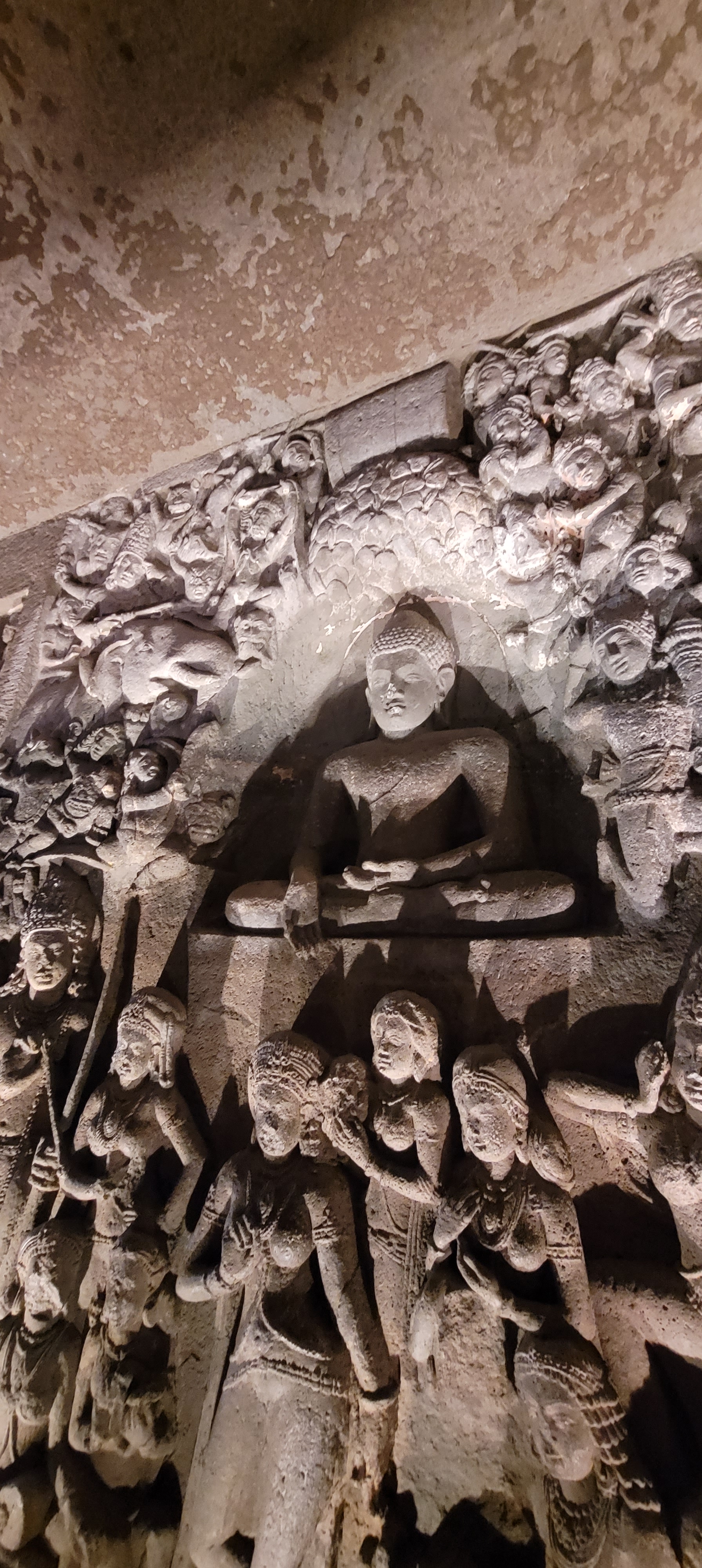
| Phase – 2: 5th Century AD to 7th Century AD | Vakataka Dynasty and Mahayana form of Buddhism | Amorphous form of worship gave way to idols and the caves now started to house sculptures of Buddha in the inner sanctum. Caves are more intricate, beautiful frescoes adorn the walls, pillars, and columns – giving Ajanta its fame as one of the premier places of ancient Indian art. Caves 1, 2, 4, 6, 7, 11, 15, 16, 17, 19, 21, 25, 26 are the important ones belonging to this period. The rest are either unfinished or inaccessible. |
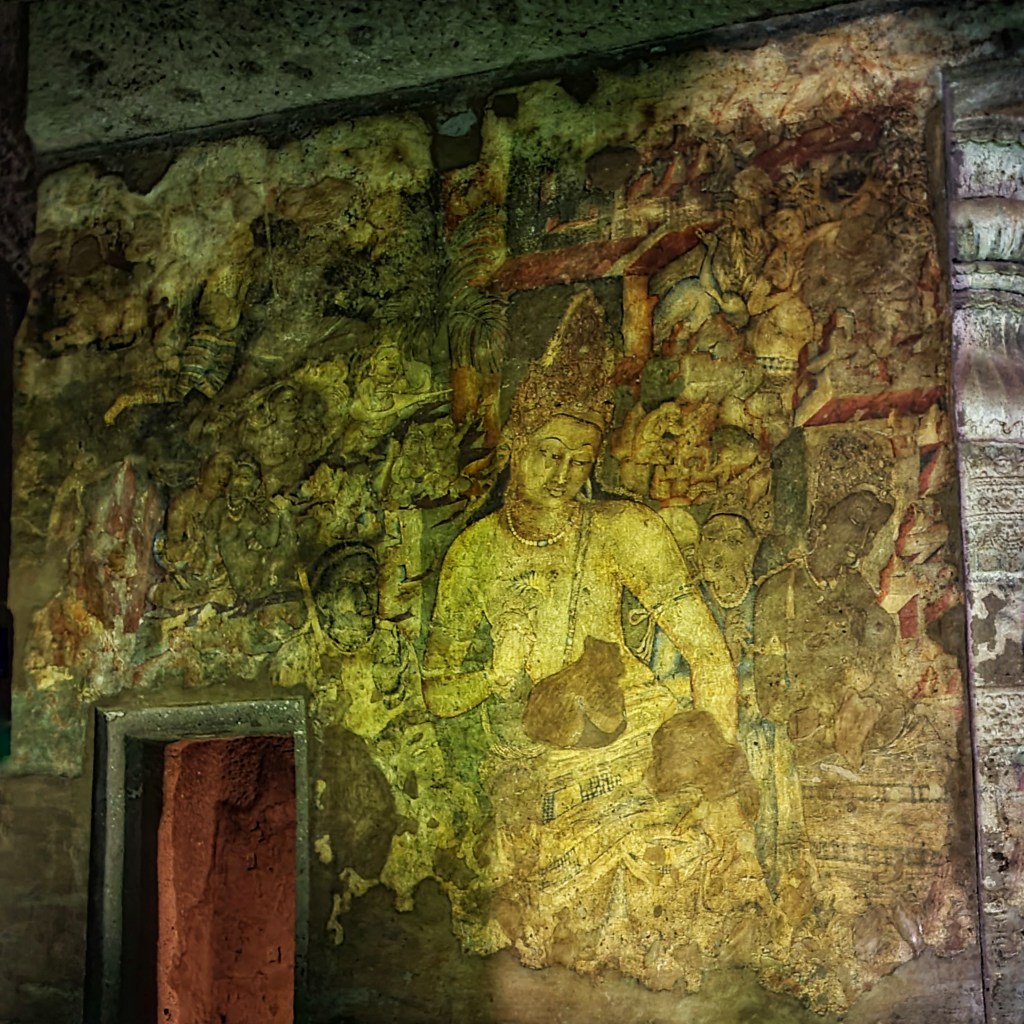
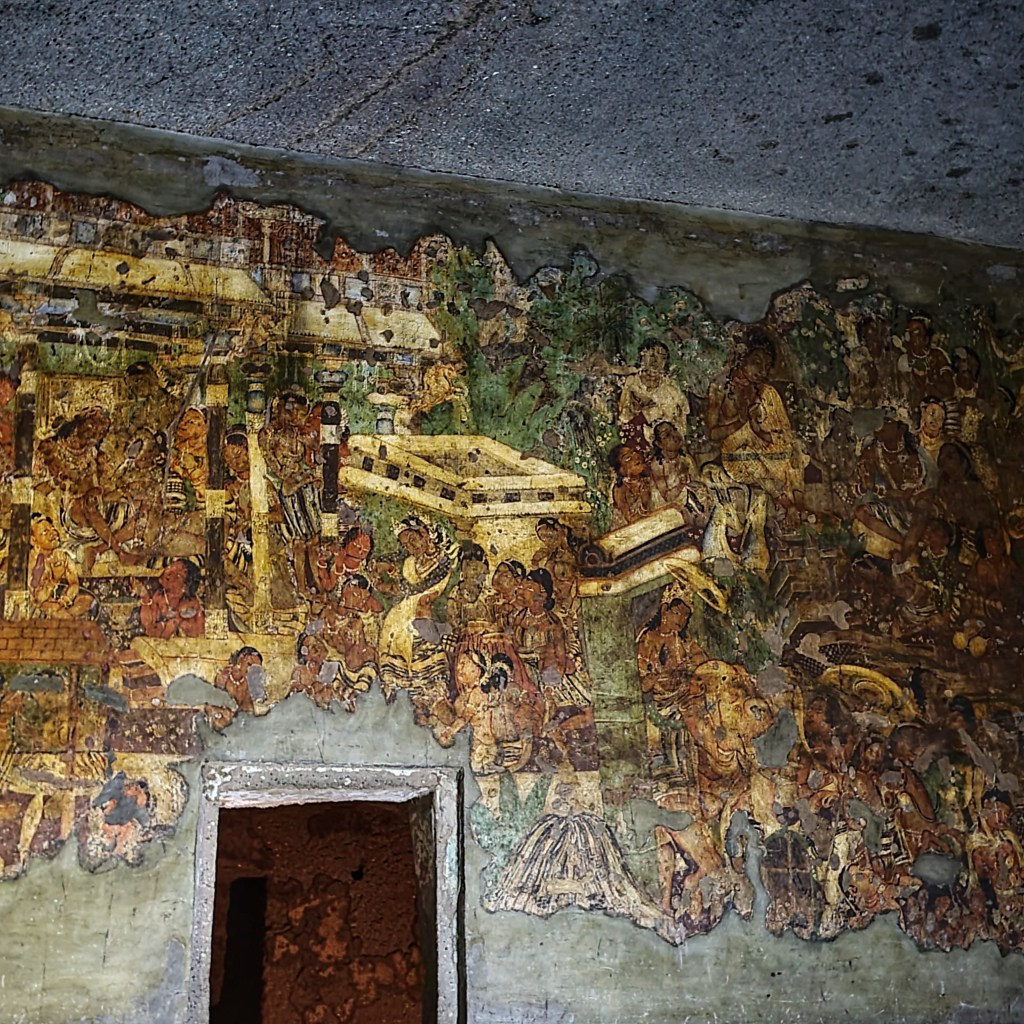
Cave 1 is home to one of Ajanta’s most recognized paintings – Padmapani. Notice the graceful curve of the body, long arms and slender fingers holding a lotus flower. He has all the bearings of a royal life, replete with a tapering crown, jewels & a dancing slave-woman beside him. But notice the expression – full serenity and detachment. Perhaps that is why people find this fascinating – a depiction of sensuousness and detachment in the same frame.
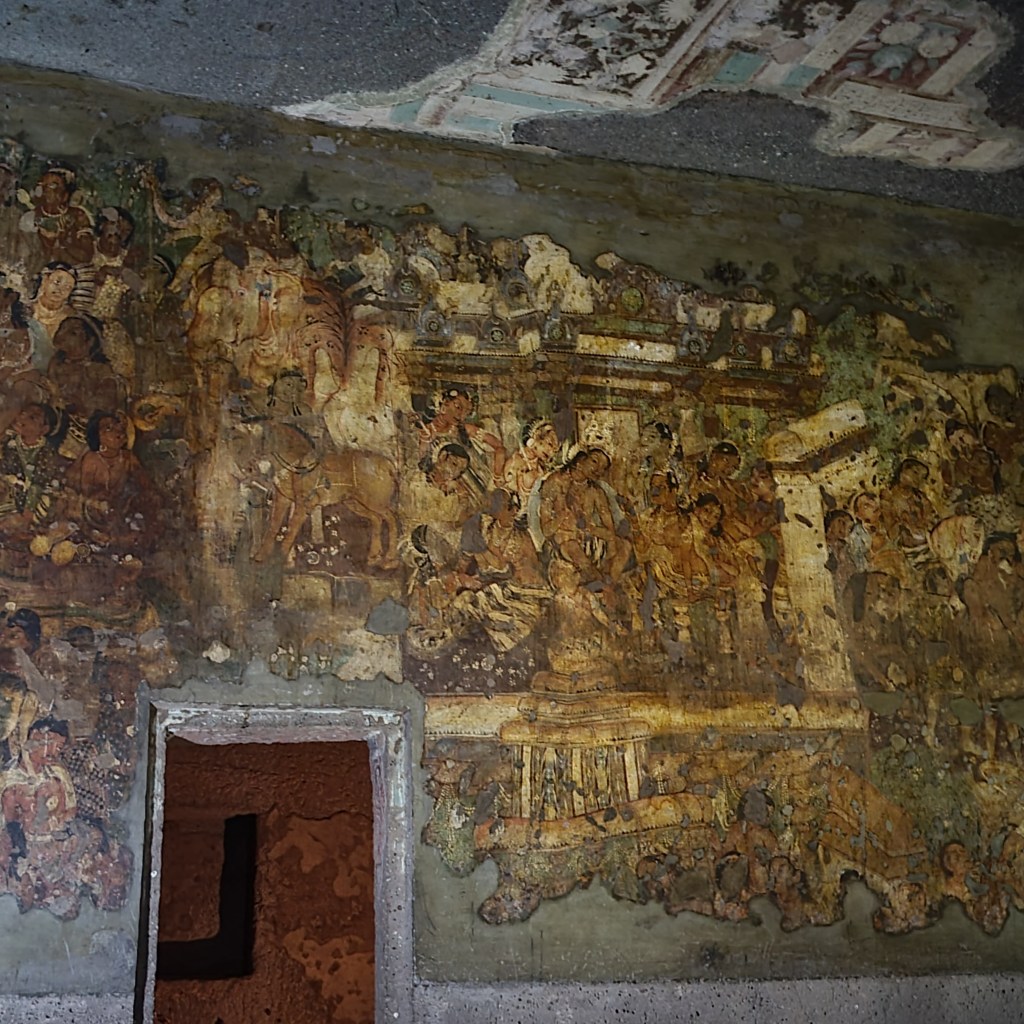
Cave 1 also has stories from Jataka tales – some prominently displayed images are those from King Mahajank’s life, him deciding to becoming after listening to a discourse from Buddha, his wife valiantly trying to lure him to recant his decision through beautiful courtiers and failing with Mahajanak finally donning the ascetics robes and letting go of his royal life.
There are some interesting features in Cave 1 – a roof painting of a cow that seems to always look at you no matter where you stand, a painting of an apparent Persian Ambassador with blue socks that seems to indicate trade existed between India & Persia at that time and a carving of 4 bulls with one head.

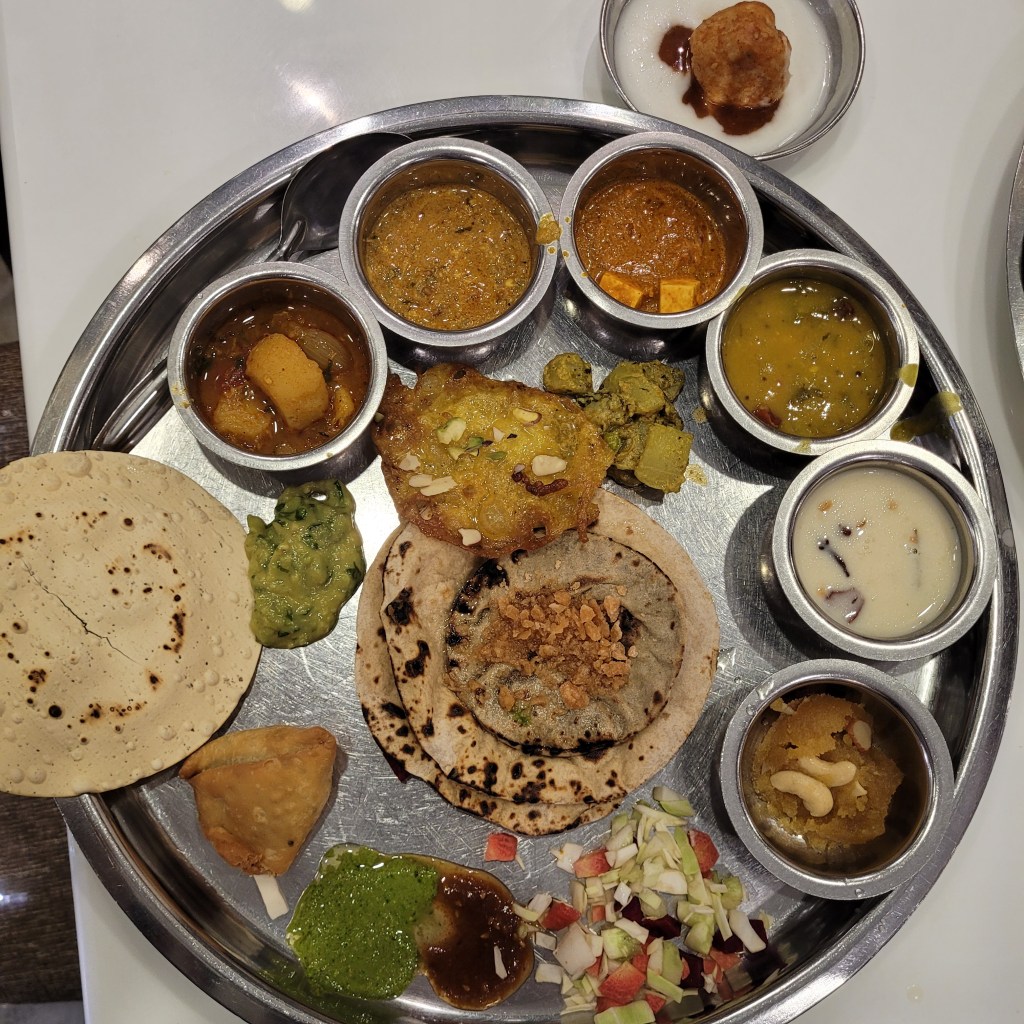
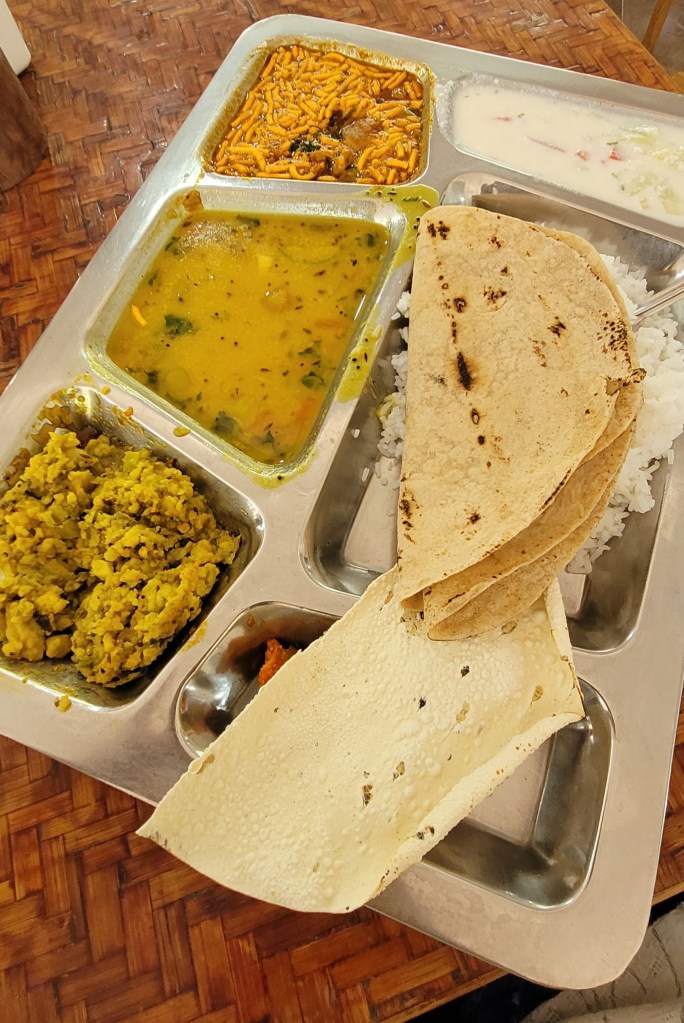
And thus ends the section on Ajanta. It was an exhausting day, with barely anything to eat till I completed the exploration of the caves. I still weep with gratitude when I think of the MSTDC restaurant that greets us at the beginning of the uphill path to Ajanta – here I could finally rest my feet and eat a Maharashtrian Thali, my first full meal of the day after 9 hours of waking up. I doubt a plate had ever been as cleanly licked as that thali was.
Aurangabad Caves
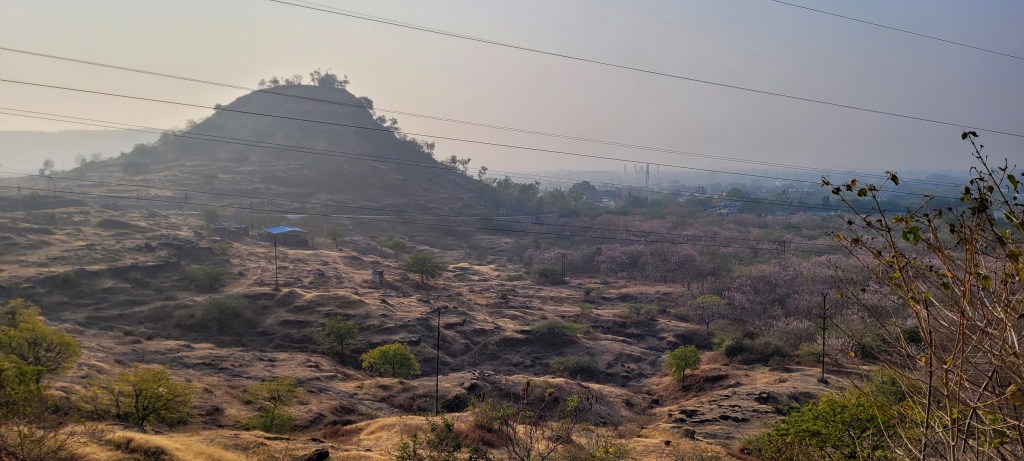
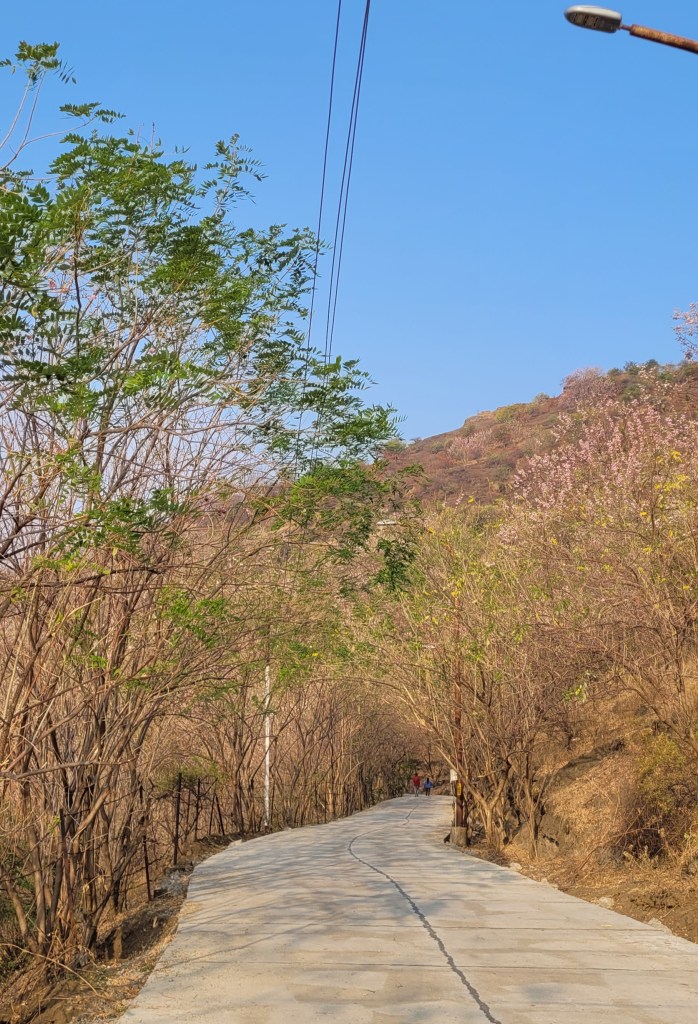
While an average tourist oft misses the series of caves simply called as “Aurangabad Caves”, I was on a mission to take in as much of the city I could. Completely eclipsed by Ellora, these caves are tranquil and worth a visit if you are a history buff. I got lucky and could catch a bus to the Caves from Bibi ka Maqbara. The route is scenic and void of people – the bus itself was empty, with the driver, conductor and me being the only occupants. For the second time in as many days, I was dropped off in the middle of nowhere – looming hill cliffs, barren landscapes and a wide, deserted roads surrounding me. The route to the caves is well-maintained, with a beautiful canopy of trees and paved roads. It acts as a jogging track to the locals and many people use it for their morning walks.
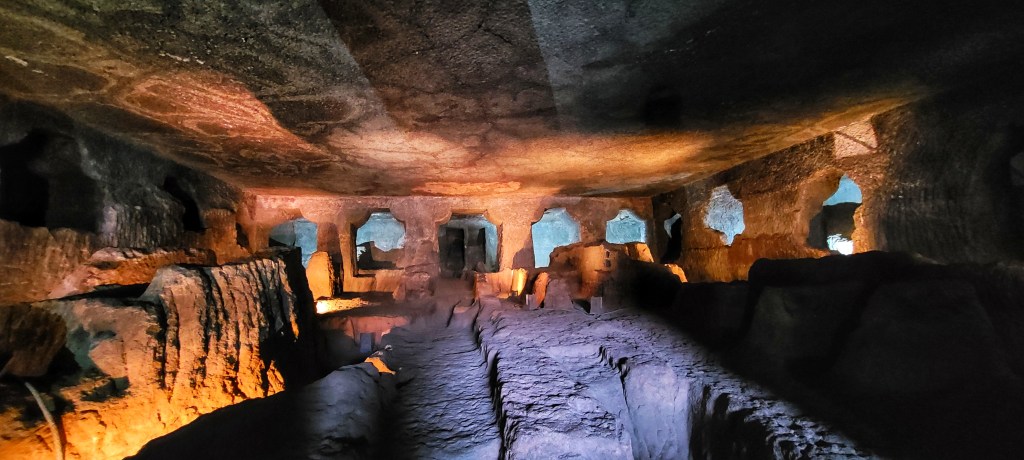
These Caves are believed to be from 6 to 7 C.E and predate Ellora. The lack of inscriptions make it difficult to date them more precisely, but they represent the fascinating flux Indian subcontinent was going through at that time – a gradual decline of Buddhism and the subsequent rise of Hinduism, especially Veera Shaivism. The group of caves are split into 2 series – the Western & Eastern Groups. This means that you need to visit one set of caves, walk all the way back and them proceed to next group. The Western Group of Caves has Caves 1 to 5, with 1 & 3 being the most interesting. We can see traces of Hindu influence in the motifs and the beginnings of the rise of Tantric Buddhism – a sect of Buddhism that incorporated cult rituals, deity worship replete with mantras and mandalas. It is more acceptably referred to as Vajrayana Buddhism now. Copulating couples, Hindu deities like Ganesha, Durga, Naga Lords point directly to this churn in the times.
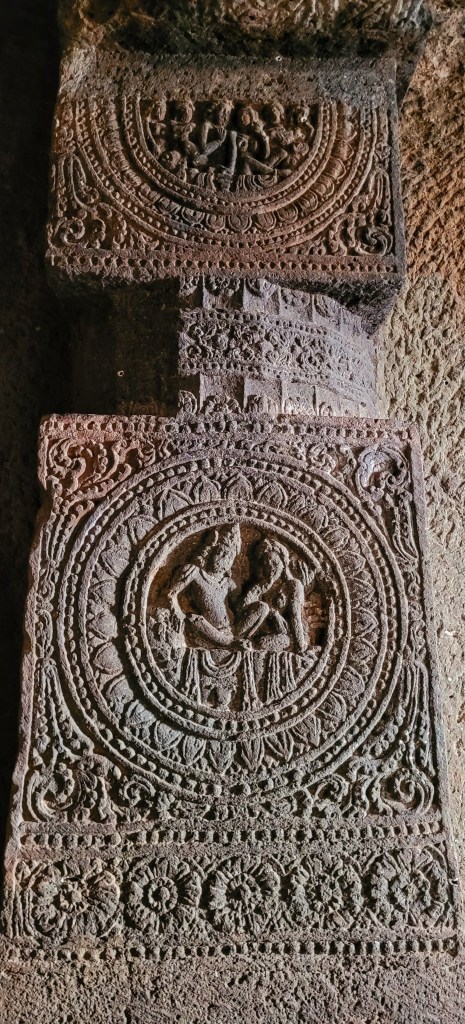
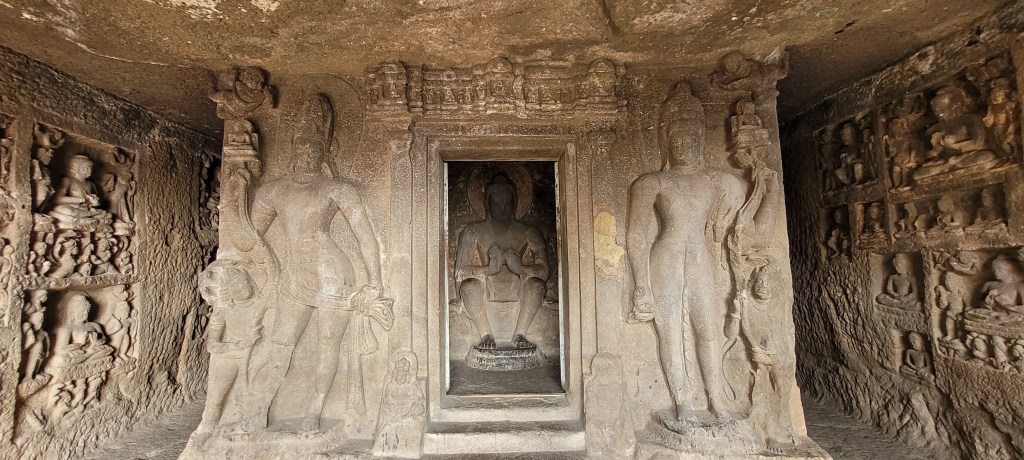
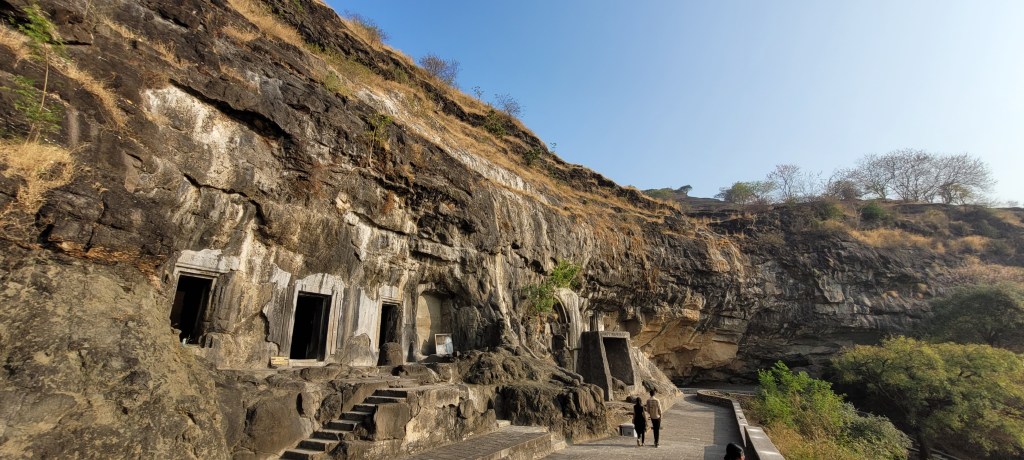
Intricately carved pillars featuring amorous couples – a feature that cannot be seen in Ellora.
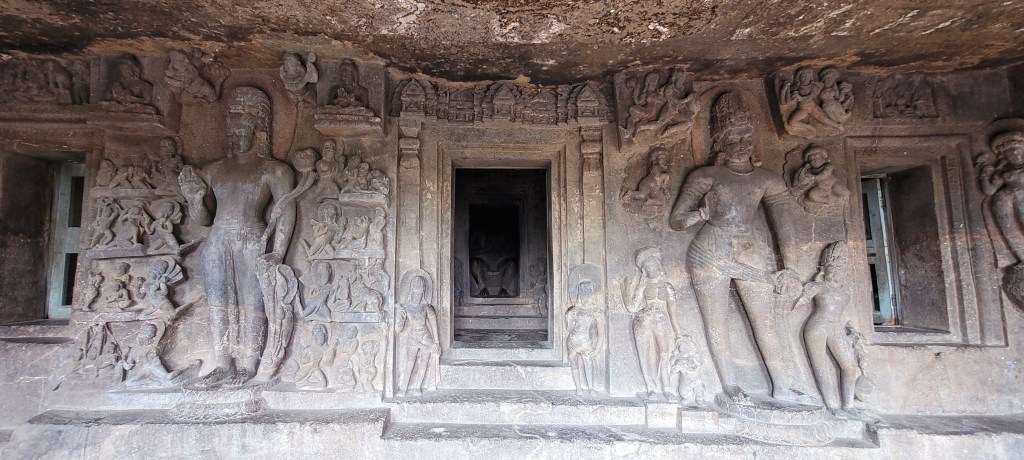
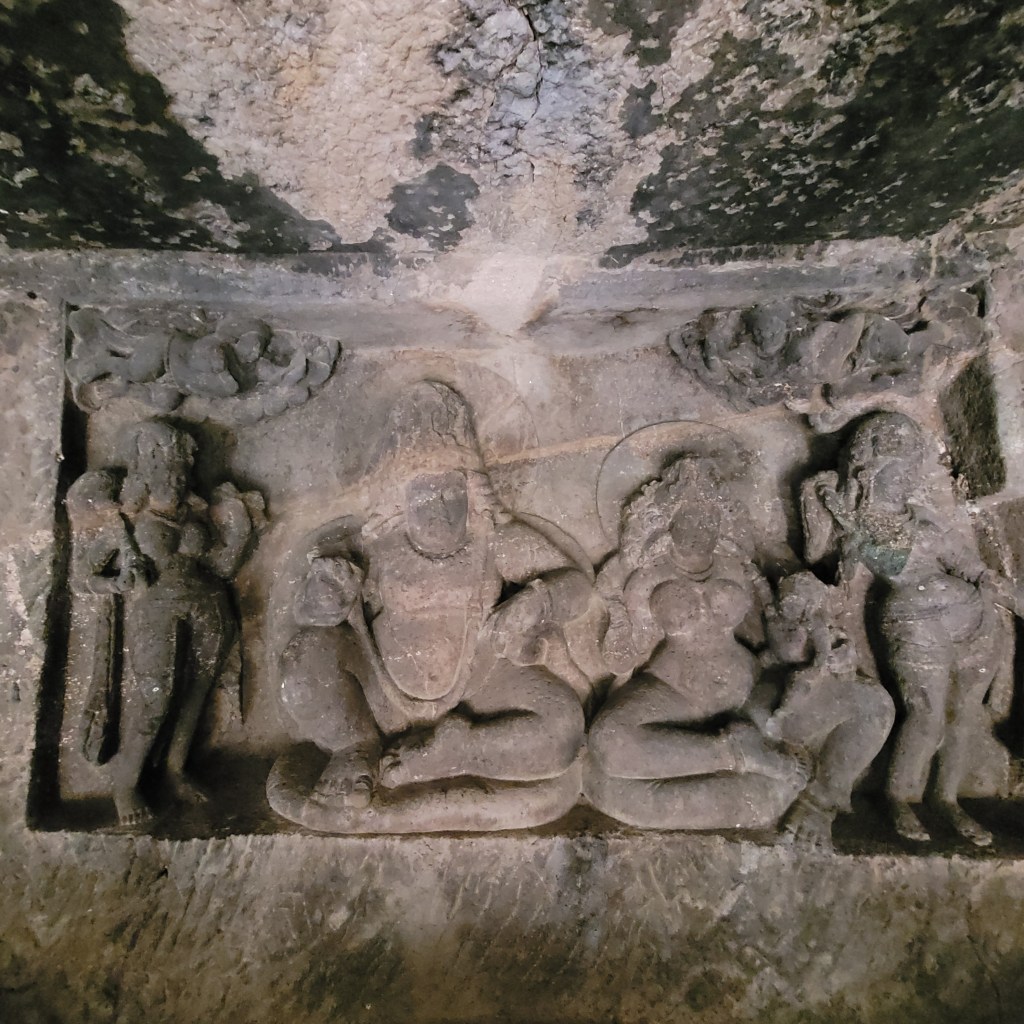
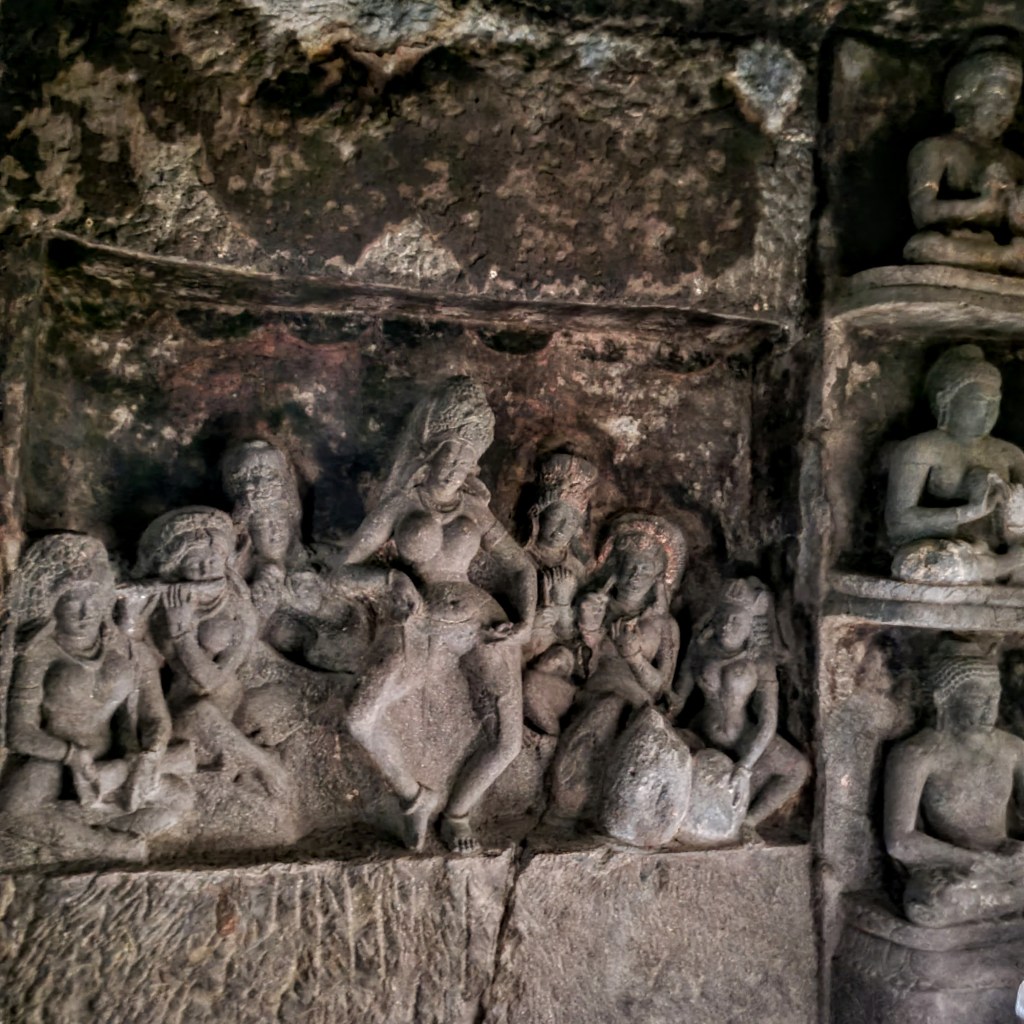

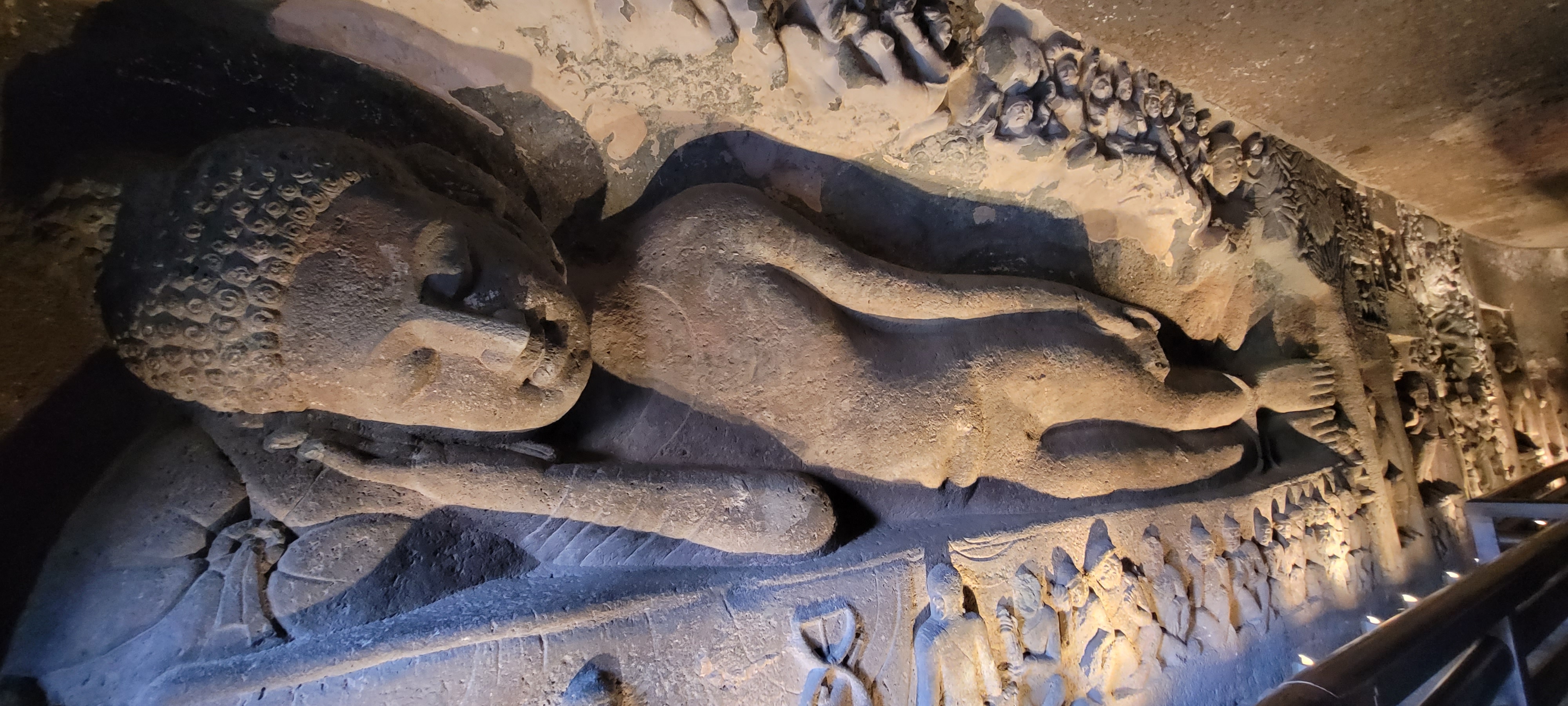
The Eastern Group contains some of the best carved Buddhist sculptures one can find in the world. The entrance to Cave 7 is richly carved with the sculptures of Avalokiteshwara on the left and Manjusri on the right – both are Bodhisattvas. The magnificent Avalokiteshwara sculpture depicts him conquering the 8 perils of Buddhism – water, lions, fire, snakes, elephants, thieves, false imprisonment & ghosts. Though these seem strange, they do have a deeper significance within the religion that also indicates the real dangers of those times. Cave 7 is also home to the famous dancing panel – a woman deeply immersed in Bharatanatyam surrounded by females playing musical instruments. Caves 9 & 10 are also unfinished, abandoned caves. We can still see the intended blueprint in the semi-carved pillars and rooms. There is also an uncompleted sculpture of Buddha in his Mahaparinirvana pose – the one where he bids adieu to his mortal body and escapes the punishing cycle of rebirth. This is very similar to the completed one in Cave 26 in Ajanta.
Food & Other Things
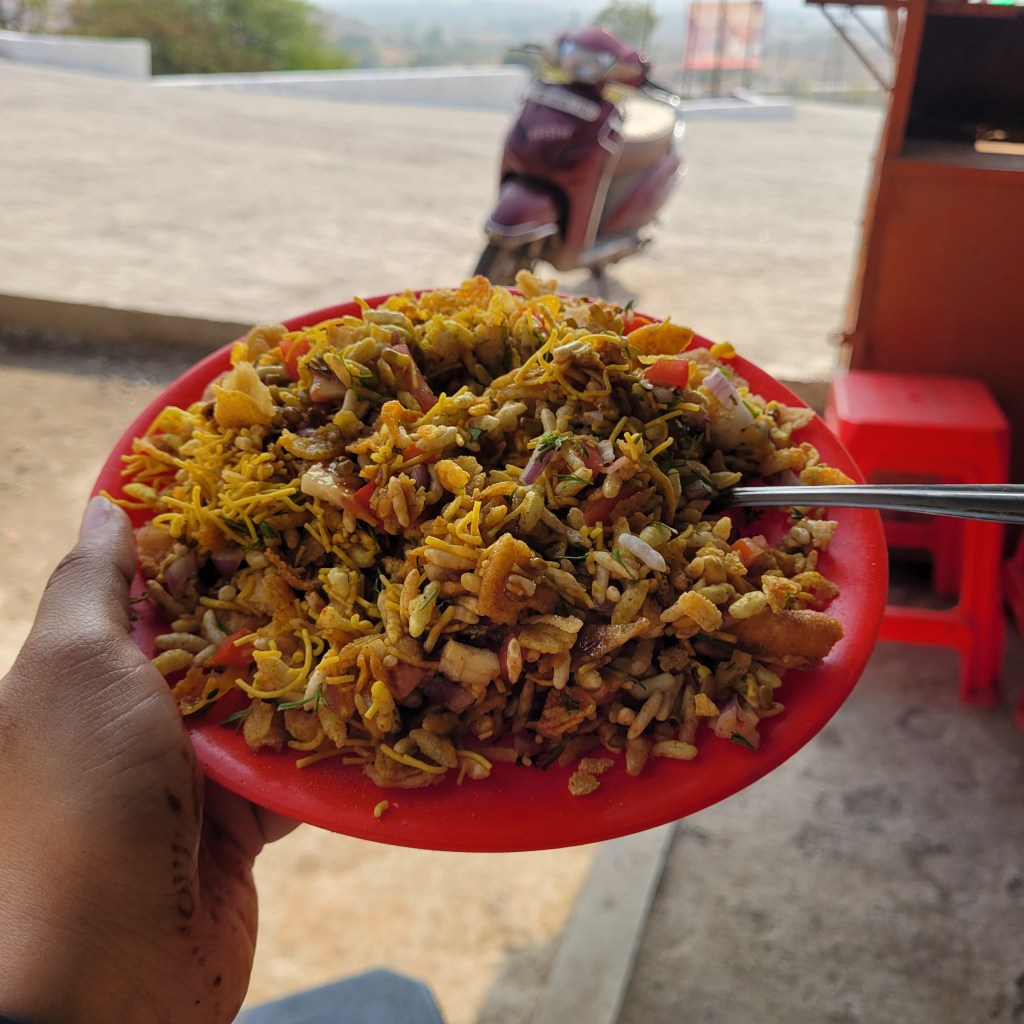
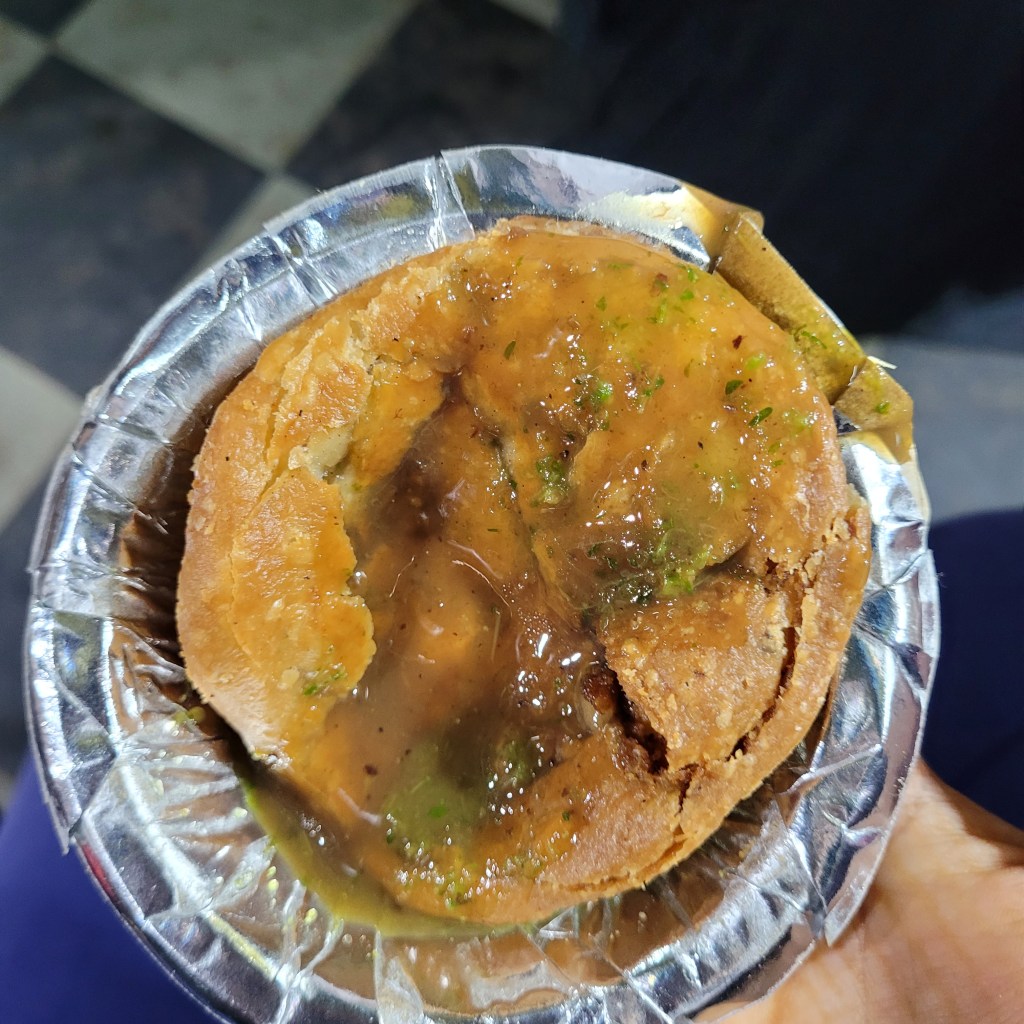
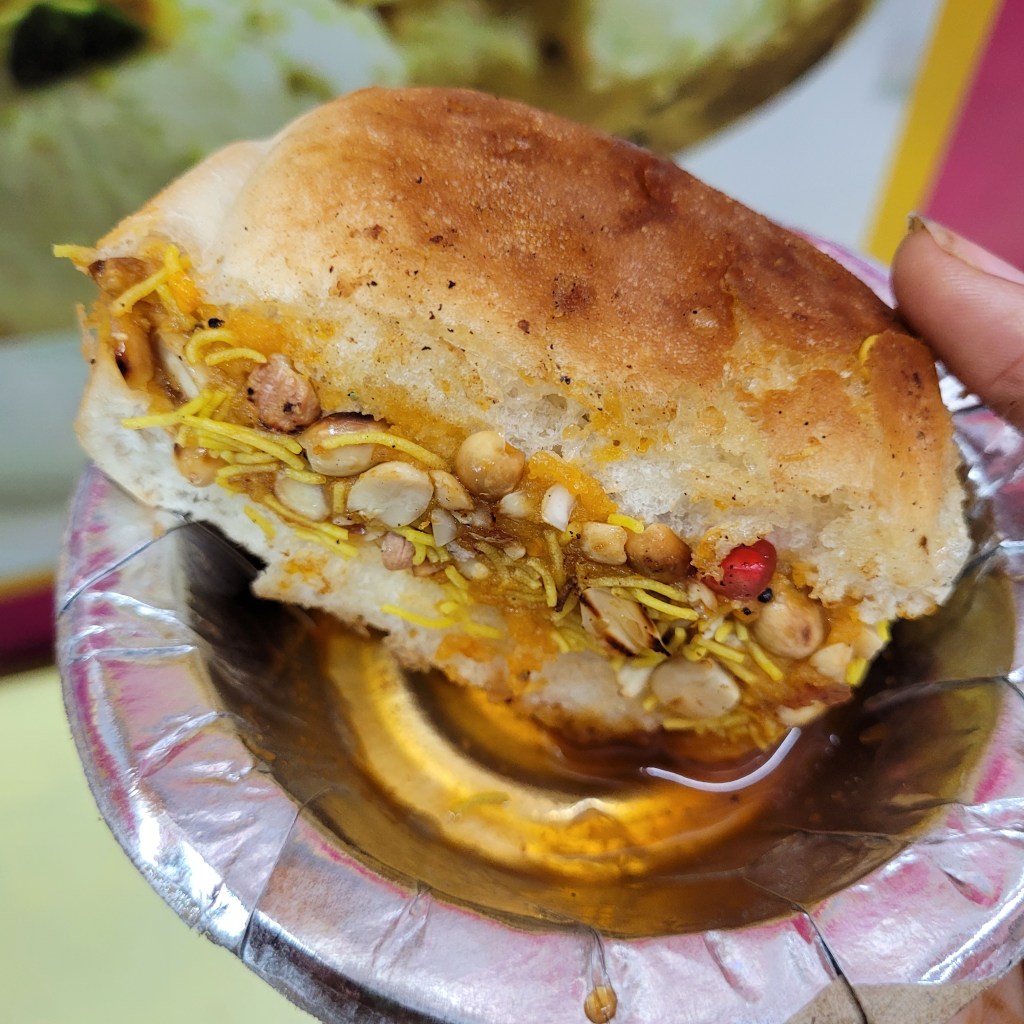
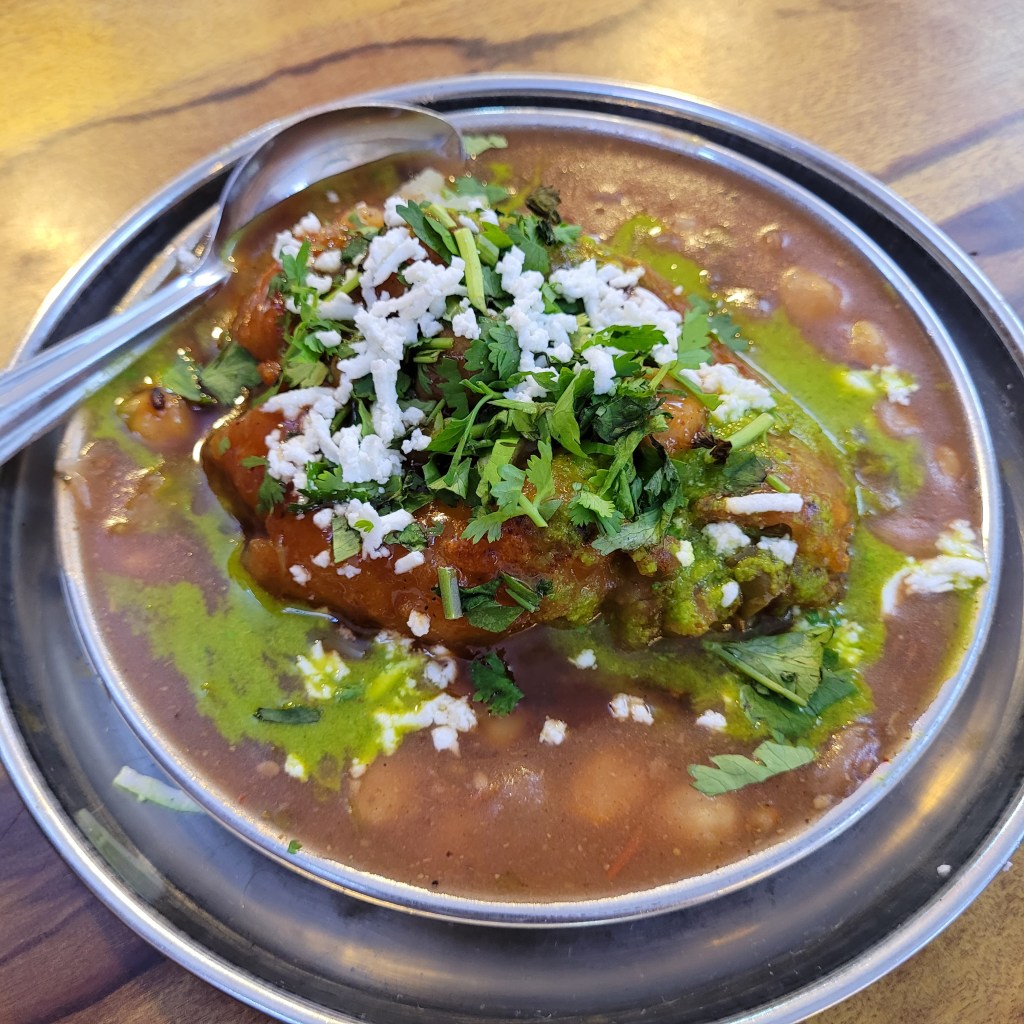
Though I have been moaning about my empty stomach during most of my explorations in Aurangabad, I did make it up by going on food walks and eating whenever there was an opportunity to do so. The food in this city is a genuine delight, and I did not have a single bad meal. My mouth waters even now when I think back to my Gulmandi visit in the night, randomly entering shops and sampling their fares.

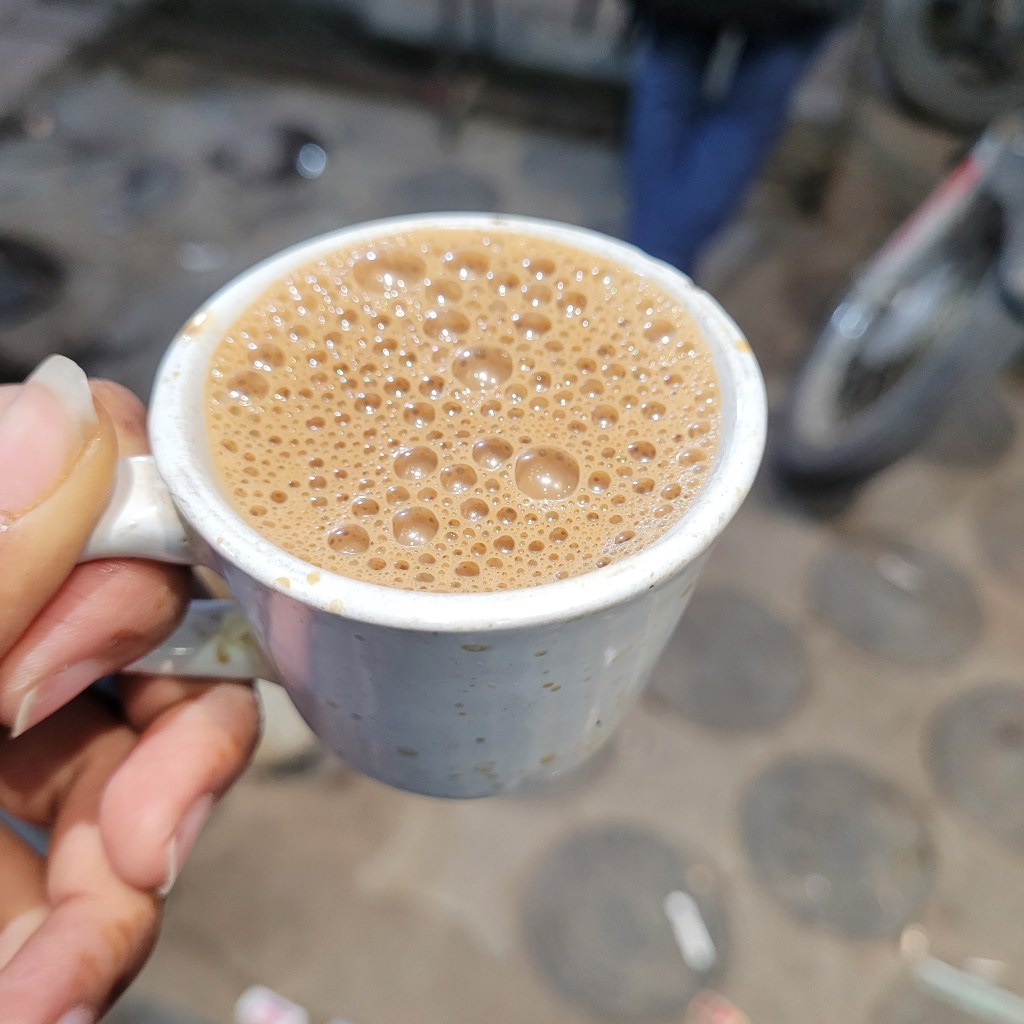
Aurangabad has a lot to offer in terms of history. It has the Devagiri Fort with its too-fascinating Andheri passage and mysterious windows, a lot of museums (though they are not well maintained, I did find a pocket-book size, Mahabharata translated to Persian with Islamic style miniature illustrations as one of the displays) and a easily commutable public transport system. They say that solo travel can be addictive and I have become a new proponent of that theory. The heartwarming experience of people guiding me in Ajanta when they realized I was alone, bus drivers going out of the way to drop me to the Aurangabad caves are some memories that I will cherish forever. Signing off now, with a nostalgic happiness of having revisited one of my favorite travel experiences!
 The Ramblings of A Most Ordinary Mind
Leave a comment